17 Oct, 2026
In This Article
Quick Answers & Key Takeaways
- IPAC Compliance ensures strict protocols for hand hygiene, PPE, and disinfection to prevent infectious disease spread in healthcare settings.
- Standard commercial cleaning is insufficient for clinics; medical cleaning requires Health Canada DIN-registered disinfectants and specific contact (dwell) times.
- Cross-contamination is prevented using a strict color-coded microfiber system (e.g., Red for high-risk, Blue for low-risk).
- Professional medical and dental office cleaning protects your patients, staff, and practice from crippling audit fines.
Healthcare settings have tighter Infection Prevention and Control (IPAC) standards than usual commercial office environments. Business as usual is not enough with a simple surface spray. Clinic managers should look to commercial cleaning companies with cleaning staff that have special training in clinical hand-washing and sanitizing, cross-contamination prevention and terminal cleaning. We give you the tough standards of medical and dental office cleaning in this helpful guide.
What is Commercial Cleaning (IPAC) Compliance?
Infection Prevention and Control, or IPAC, refers to a set of evidence-based, proven practices that limit the spread of infectious illnesses, particularly in healthcare environments. Under the process of IPAC compliance, a commercial cleaning company follows strict, standardized protocols for hand hygiene, PPE use, surface cleaning and disinfecting, and safe collection and disposal of contaminated material.
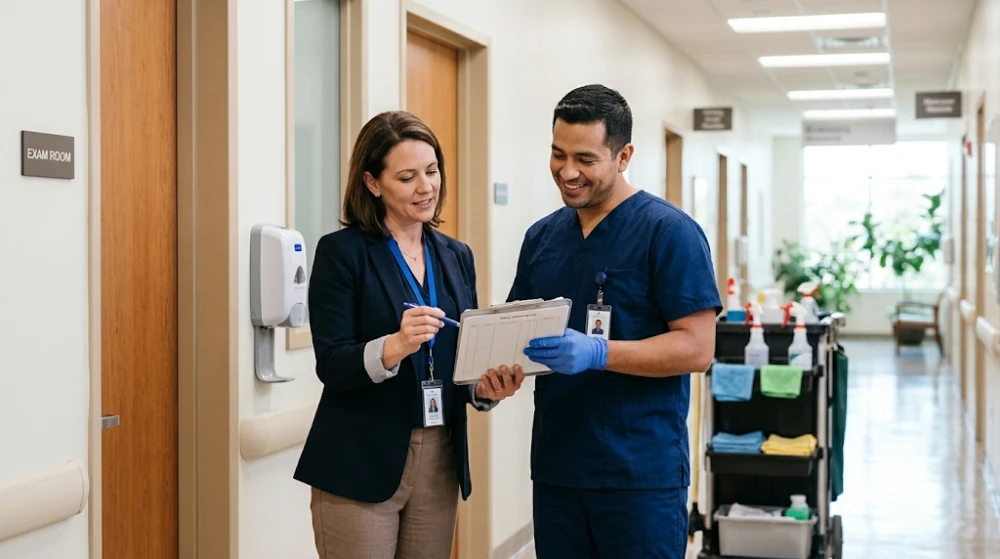
If your clinic undergoes a provincial health authority audit, the facility manager faces the pressure of demonstrating to the auditor that their environmental cleaning meets IPAC criteria. By engaging a generic cleaning service that isn't trained in cleaning healthcare-related facilities, the clinic exposes itself to the possibility of audit failure, crippling fines or closure down the road. A healthcare-specific clean will have your environmental logs, chemical safety data sheets (SDS) and disinfection procedures checked and ready for the audit.
The Critical Differences: Standard Office Cleaning vs. Medical Cleaning
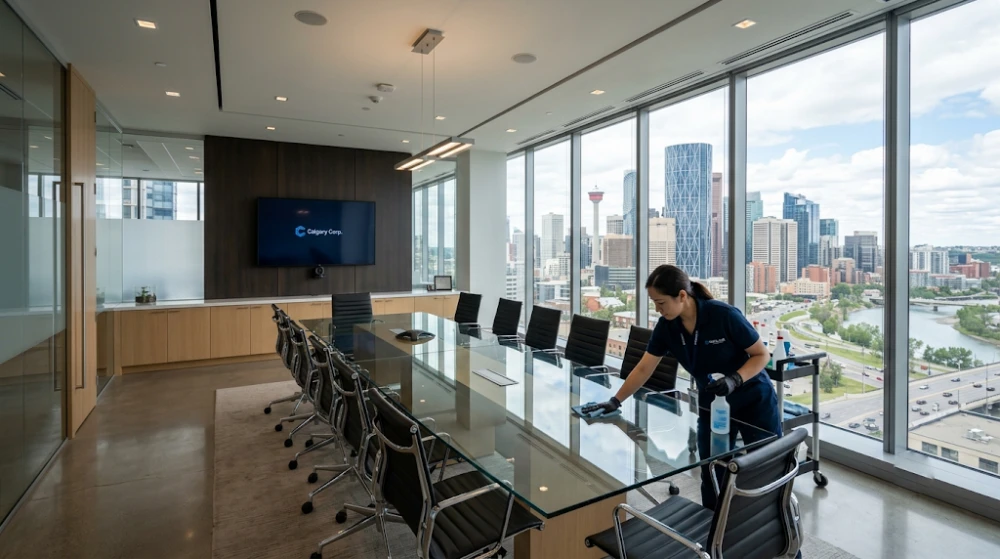
One common mistake facility managers make is employing general commercial cleaning companies for their healthcare facilities to save costs. But the approach to cleaning a dental operatory and a corporate boardroom is vastly different.
1. Chemicals & Disinfectants
General offices use standard degreasers. Medical cleaning dictates the use of hospital-grade, broad-spectrum disinfectants with a Drug Identification Number (DIN) from Health Canada, proving effectiveness against bacteria like MRSA, C. diff, and Hepatitis B.
2. Targeted High-Touch Areas
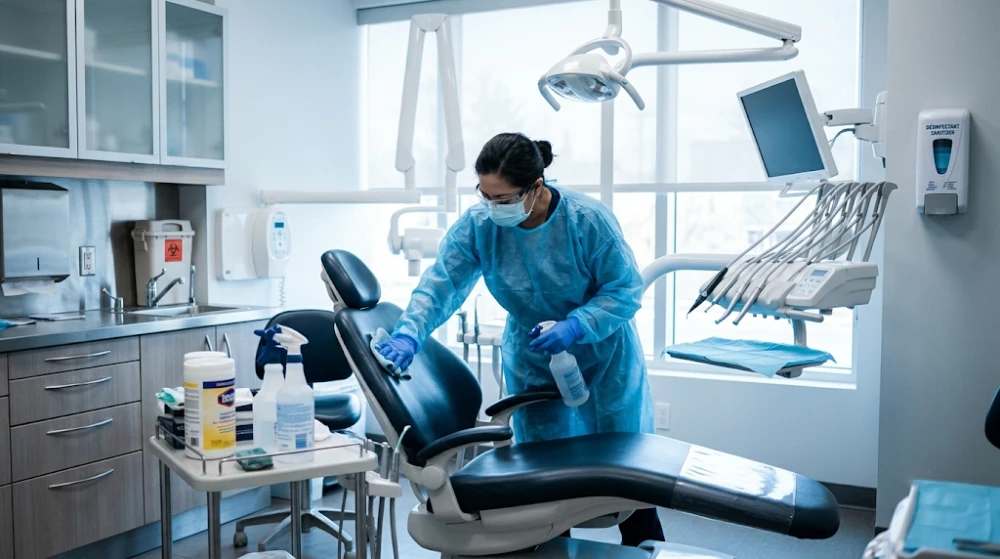
While general cleaners focus on floors and trash, medical cleaners are trained to target clinical high-touch points (HTPs) like patient chairs, exam lights, blood pressure cuffs, and sterilization room counters.
3. Pathogen Isolation
General cleaners tend to carry one mop bucket throughout a facility. Medical cleaners change microfiber cloths and mop heads after every exam room to prevent cross-contamination from spreading potential hazards.
Essential Protocols for Dental Clinic & Medical Office Cleaning
Elite medical cleaning companies implement controlled, engineered protocols to ensure a safe, sterile environment that helps keep patients and clinicians protected.
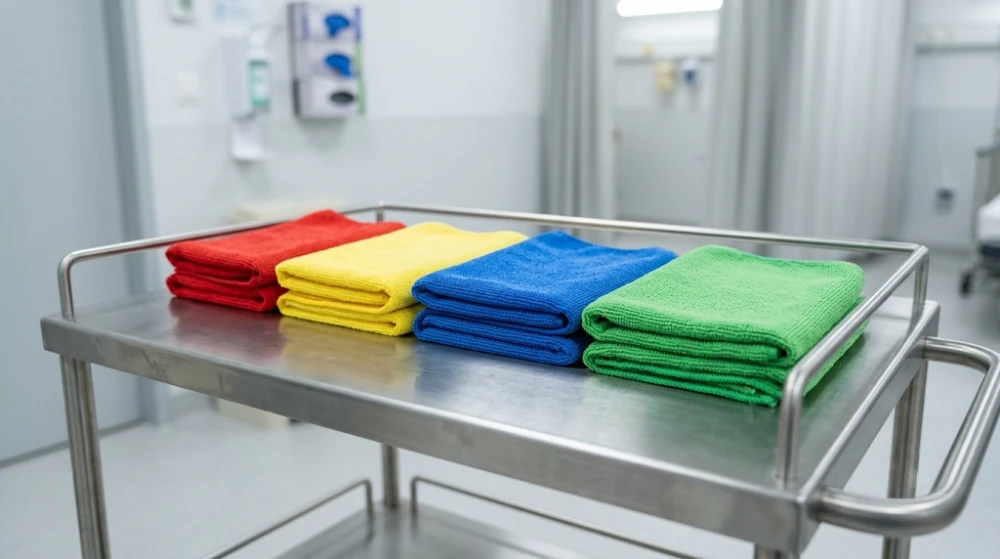
1. Color-Coded Microfiber System
The biggest risk to a healthcare facility is cross-contamination. Using the same cloth to wipe a waiting room table and an operatory counter is one of the worst IPAC violations possible. To avoid this, compliant cleaning services employ a rigid color-coded microfiber approach:
- Red Cloths: Only to be used in high-risk infection control areas (e.g., toilets and urinal floors).
- Yellow Cloths: Used for sinks in the patient area, clinical counters, and mirrors.
- Blue Cloths: Used in areas that pose minimal risk, such as waiting room furniture and office staff areas, including reception desks.
- Green Cloths: Only utilized in food prep areas in staff breakrooms and with areas of sensitive medical equipment.
By applying color-coding, the environmental team visually assures that bacteria from a restroom are never moved to a dental chair or pediatric exam table.
2. Terminal Cleaning Procedures
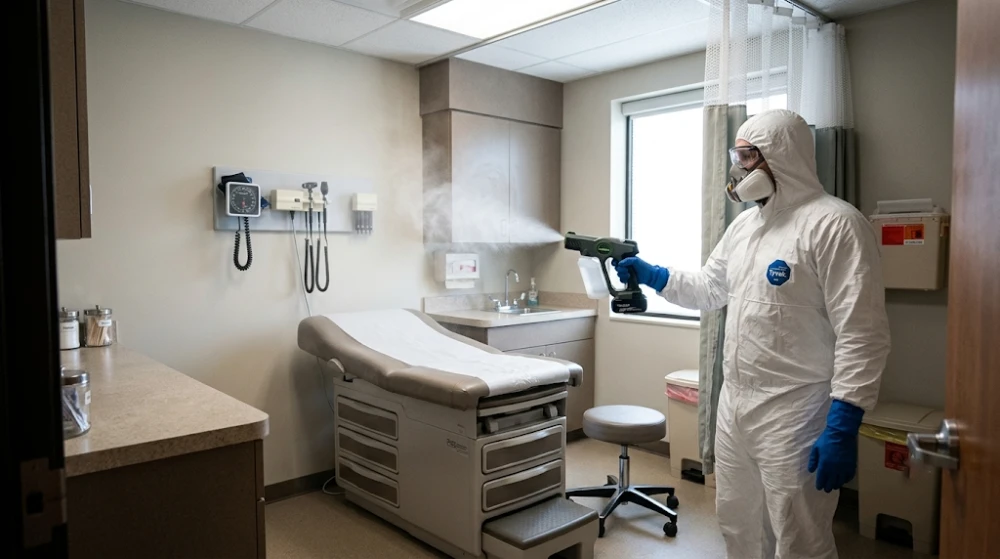
Daily cleaning tasks remove visible soil and provide general disinfecting. However, many healthcare facilities need a process called "terminal cleaning." Terminal cleaning is a deep cleaning that effectively removes infectious organisms from the room, typically performed when an infectious patient has been in the room or during an outbreak.
Every surface from the ceiling to the floor is disinfected, encompassing ceiling fixtures, vent covers, window blinds, walls, exam tables, under tables, and baseboards. Electrostatic fogging is commonly used in conjunction with terminal cleaning to get into hard-to-reach areas of medical equipment.
3. Strict Adherence to Dwell Time
Dwell time (or contact time) is the amount of time a disinfectant needs to be visibly wet on a surface to eliminate the germs or bacteria present. It's a specific period identified by the manufacturer.
Taking a DIN-registered tuberculocidal wipe with a three-minute dwell time and wiping a surface dry after thirty seconds means you've just wasted the chemical. Our trained healthcare cleaners are familiar with the dwell time of various chemicals, ensuring reception desks, door handles, and clinical counters receive the correct wet contact time for total efficacy.
Key Zones That Require Hyper-Focused Disinfection
One of the most successful medical cleaning strategies is dividing the clinic into different sections and treating those sections based on their risk potential.
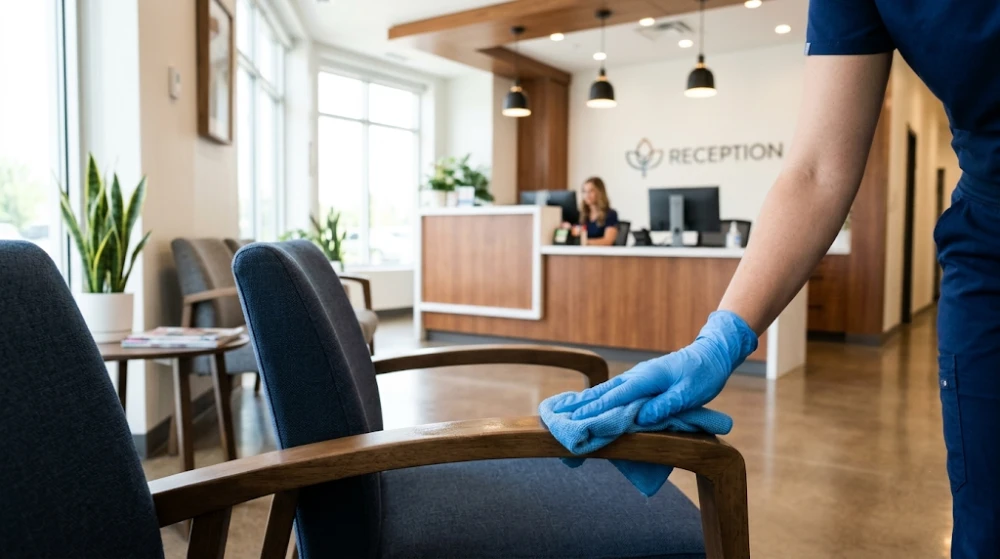
The Reception and Waiting Area
Once in the waiting room, aerosolized and contact-based germs are prime. High-Touch Points (HTPs) need to be wiped down several times a day: keyboards/mice, patient check-in computers, armrests on waiting room chairs, and the reception desk.
Clinical Operatories and Examination Rooms
These rooms require the strictest use of IPAC standards. In addition to a quick wipe down between patient visits, the evening cleaning team provides thorough, restorative disinfecting. Cleaners must maneuver around multi-thousand-dollar equipment-getting underneath cords, foot pedals, and diagnostic monitors.
Staff Breakrooms
Research reveals that nurses' and doctors' breakrooms often have higher levels of bacteria than bathroom facilities due to bacterial transfer from unwashed hands and healthcare scrubs. Medical cleaning guidelines direct facilities to thoroughly clean refrigerator handles, microwave buttons, coffee makers and tables to safeguard employee health.
FAQs About Medical Office Cleaning
What is the Full Form of IPAC in Medical Cleaning?
IPAC refers to Infection Prevention and Control. IPAC is the standard practice to prevent the transmission of infectious diseases in healthcare settings. Your commercial cleaning company must follow specific guidelines related to IPAC regarding chemicals, hand hygiene, and cross-contamination prevention.
What is a DIN-registered disinfectant?
A Drug Identification Number (DIN) is an eight-digit number unique to a disinfectant, assigned by Health Canada before it is marketed. It is validation that the product has been reviewed and determined safe and effective in killing specific pathogens-a legal requirement for medical cleaning products in Canada.
In a Dental Practice, How Is Cross-Contamination Prevented Through Cleaning?
Medical cleaning providers stop bacterial cross-contamination through strict color-coded microfiber cloths and mop systems. This guarantees that tools (and bacteria) from a restroom are never used in clinical rooms or operatories.
Ensure Your Clinic is IPAC Compliant Today
Don't risk your patients' health or your clinic's reputation with standard cleaning. Partner with experts trained in healthcare environments.
Get a Free Medical Cleaning QuoteNeed Clinical Cleaners?
We provide hospital-grade, IPAC-compliant cleaning for clinics across Canada.
Contact ServicesProWhat is the Full Form of IPAC in Medical Cleaning?
IPAC refers to Infection Prevention and Control. It is the standard practice to prevent the transmission of infectious diseases in healthcare settings.
What is a DIN-registered disinfectant?
A Drug Identification Number (DIN) is an eight-digit number unique to a disinfectant, assigned by Health Canada to validate that the product is safe and effective in killing specific pathogens.
In a Dental Practice, How Is Cross-Contamination Prevented Through Cleaning?
Medical cleaning providers stop bacterial cross-contamination through strict color-coded microfiber cloths and mop systems, ensuring tools used in restrooms are never used in clinical rooms.
Can regular commercial janitorial staff properly clean a dental or medical clinic?
Generally, no. Standard janitorial crews lack the specialized training required for clinical environments. IPAC-compliant cleaning demands technicians trained in proper Personal Protective Equipment (PPE) protocol, aseptic cleaning sequences, accurate chemical dilution and biohazard risk management to ensure clinics pass regulatory inspections and protect public health.